About “The compass”
Here you learn about different types of compasses and the parts they consist of. You also learn how the compass is used to orientate the map and take a compass bearing.
Support for map reading
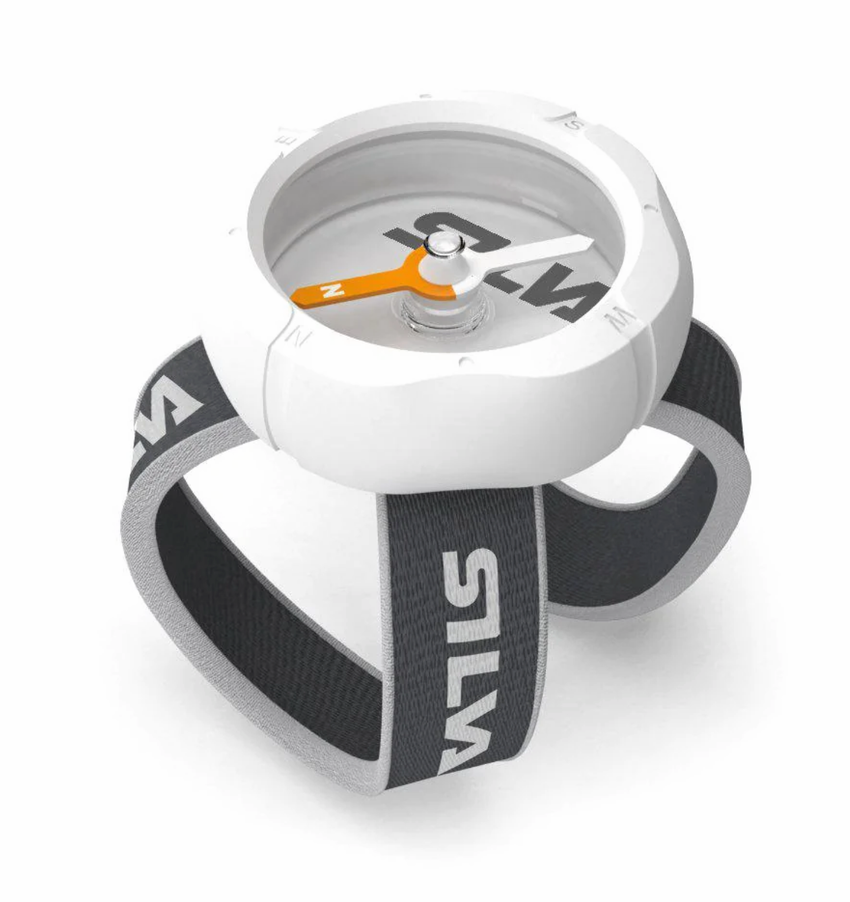
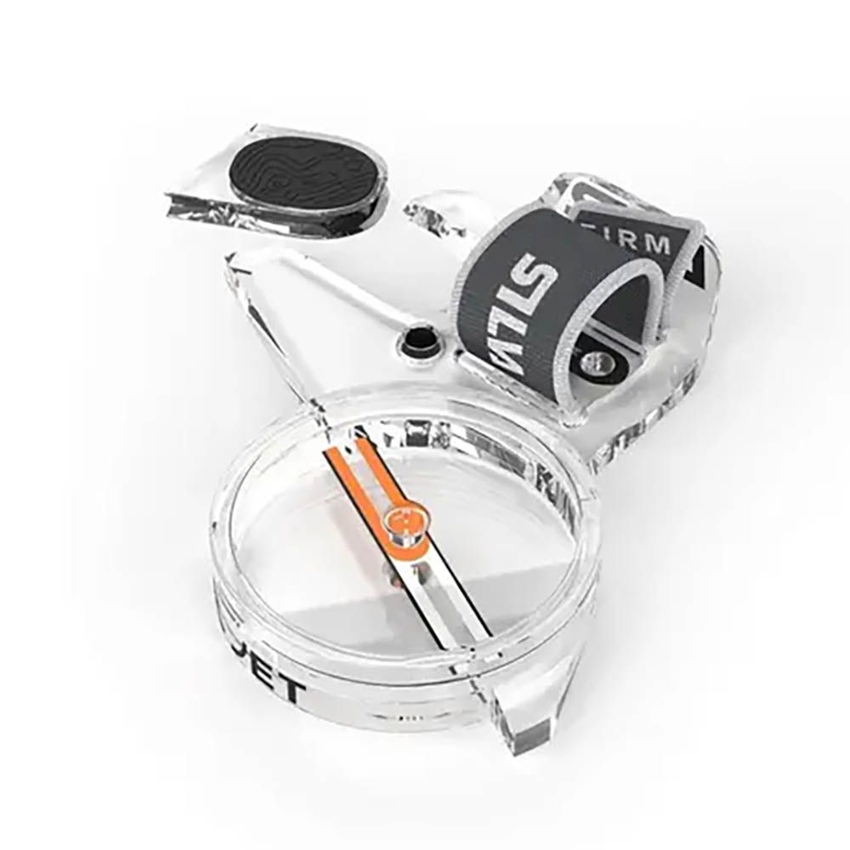
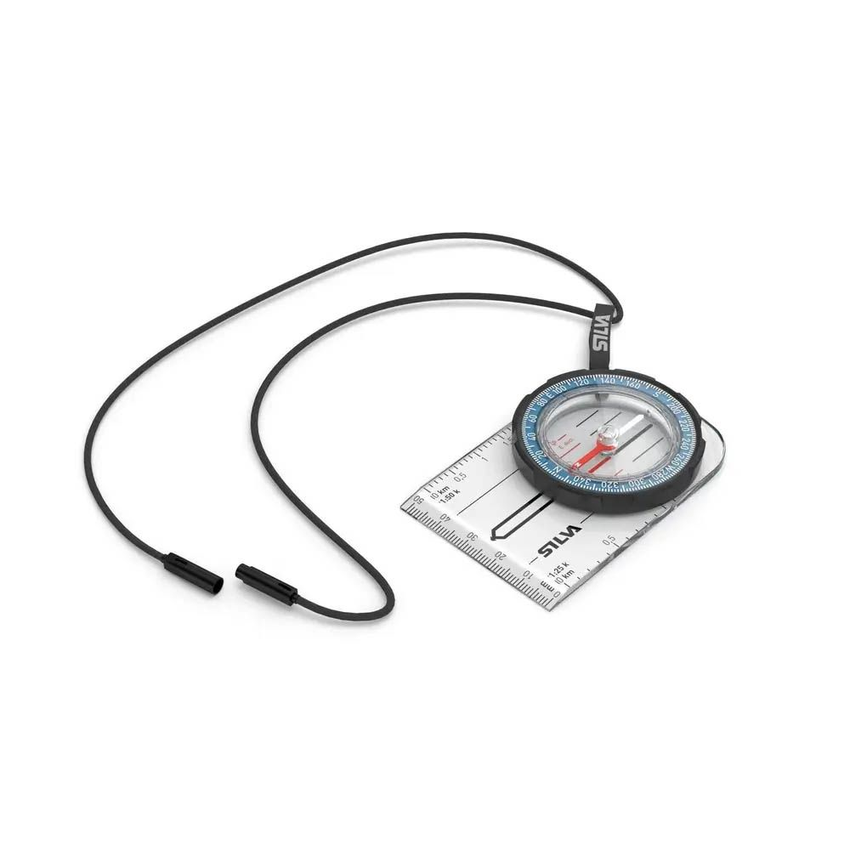
You can use the cardinal directions north, south, east and west to say where you are and where you are going. To find your direction, you can use a compass. The compass is a support for map reading and can be useful when you move away from line features and there are no paths, streams or other clear details to follow. A compass bearing helps you go in the right direction. Click the buttons to see different compasses.
-fxHvcjZTux.png)
North on the map
There may be several things that help you see where north is on the map:
Thin black lines running through the map from north to south - north lines.
An arrow marked N pointing north.
North is always up on the map when you hold it such that any text reads from left to right.
Use the compass to orientate the map
In control 3 you learnt to orientate the map by looking at the terrain. You can also use the compass to orientate the map. Do this:
- Hold the compass horizontally in front of you, just above or on the map.
- Rotate the map slowly.
- Be precise, stop when the compass needle lies parallel with the north lines on the map with the red end pointing north on the map.
- Now the map is orientated!
Try it yourself:
How to use a compass bearing
The baseplate compass is best suited to take a compass bearing from the point you are at to the point you want to reach. It helps you keep direction when moving through the terrain. First you must set it:
You can also take a compass bearing with the thumb compass:
- Orientate the map so the compass needle and the north lines are parallel.
- Place the compass tip where you are and let it point towards the next point. Turn your whole body, including your feet, to fine-tune the map orientation.
- Move towards the chosen point and continue to steer yourself by keeping the compass tip pointing towards the next point.
When should you take a compass bearing?
Is it most useful to take a compass bearing when you are on line features or away from them?
ShowHide answer
When you are away from line features and there are no paths, streams or other clear details to follow, the compass bearing helps you walk in the right direction.

How to use compass bearing
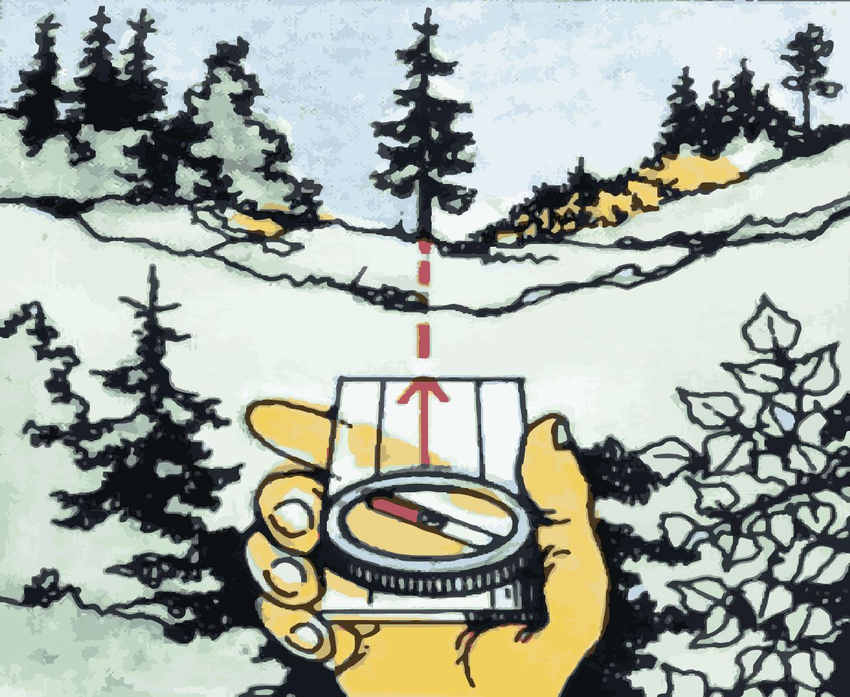
Sight at a clear feature in the terrain further ahead that lies exactly along your bearing. A tree, a marked knoll, a distinct marsh or something that stands out from the surroundings are good aiming points. They may be some distance ahead – this makes the direction more accurate. You should always be able to see the point or be sure that you will find it. If you come to obstacles along the way, pick a new sighting point just beyond the obstacle, go around it, and continue the bearing.
Check the bearing before you reach the sighting point, then take a new compass bearing. Repeat until you reach the control. Make sure the compass housing is not rotated as you move between sighting points.
Sighting points and checkpoints
Drag the slider to see map details that can be good sighting points and checkpoints on the way to the next control.
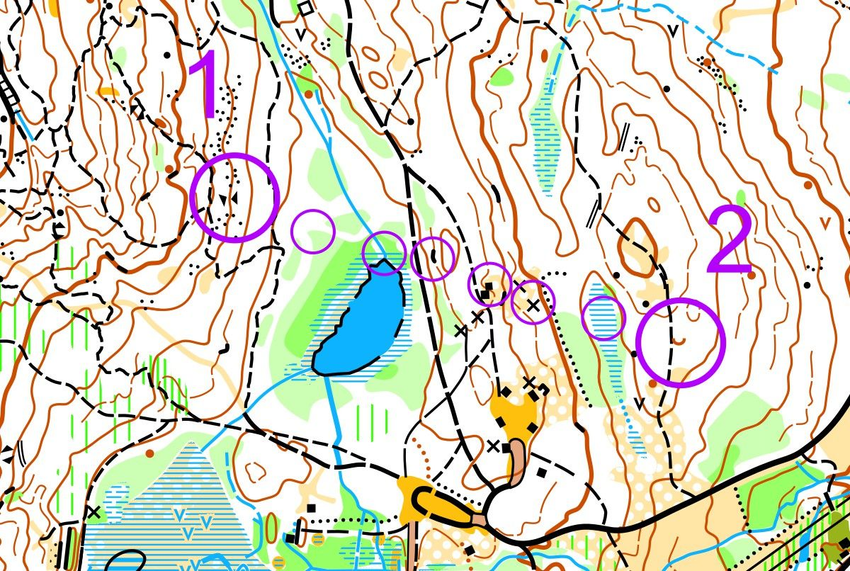
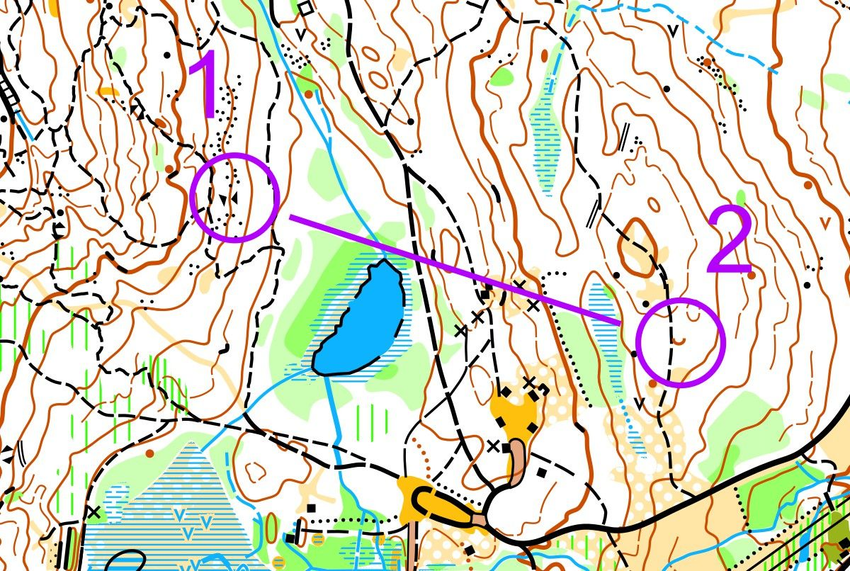
You should always choose some reliable checkpoints along the bearing and check them as you pass. It is also useful to estimate how far it is to the control. When you get close to the control, it is smart to look both right and left, since it is rare to hit the control exactly.
It can be smart to divide a long leg into sections and make sure you are know where you are by crossing line features along the way. Follow the line feature to a reliable checkpoint and take a new compass bearing.
Tips
If you get off course, you must figure out where you are and take a new compass bearing, or go back to the last sighting point before continuing.
What have you learned?
Answer all questions correctly and win a gold medal!
Which end of the compass needle points towards north?
What are north lines?
The map is orientated using the compass when…
Which compass is best suited to take a compass bearing?
Which arrow should you follow when you have taken a compass bearing?
Which of these is the best sighting point?
Which side of the map should point north for the map to be orientated
What should you do if you have taken a compass bearing but suddenly cannot follow it?

Activities
Play: Compass Fun (Activity Bank)
With orienteering map: Compass Training (Activity Bank)
With orienteering map: Treasure Hunt with Compass (Activity Bank)
Video: Using a Compass (YouTube)