About "Map contact"
Here you learn what it means to have map contact and that thumbing can help you always know where you are.
Look at the map often
When you have orientated the map with north and know where you are on the map, then you have map contact.
Map contact should be fairly precise. Even if you do not look at the map all the time, you should quickly be able to figure out where you are within a margin of 20 meters. Does this sound difficult? It is actually fully possible as you learn the different orienteering techniques.
When you run, it is easy to lose map contact. If you are about to lose map contact, you should slow down! Orientate the map and look at it often, so you can continuously follow line features and checkpoints.
Tips
Notice: What is in front of you? What is to your right? What is to your left?
Use reliable line features and checkpoints
You can start practicing map contact using reliable line features such as paths and streams – and reliable checkpoints such as path junctions, large marshes, cliffs, buildings and distinct boulders. Later you can use line features that are less distinct, such as vegetation boundaries, power lines and the edges of large marshes – and checkpoints such as knolls, distinct ridges and small marshes.
If you practice looking at the map to see what will soon appear in the terrain ahead of you, it becomes even easier to keep map contact all the time.
Practice map contact
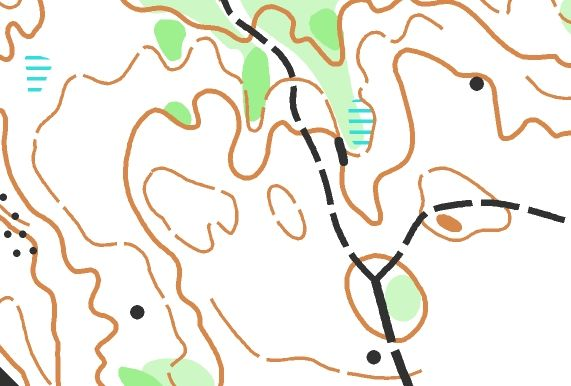
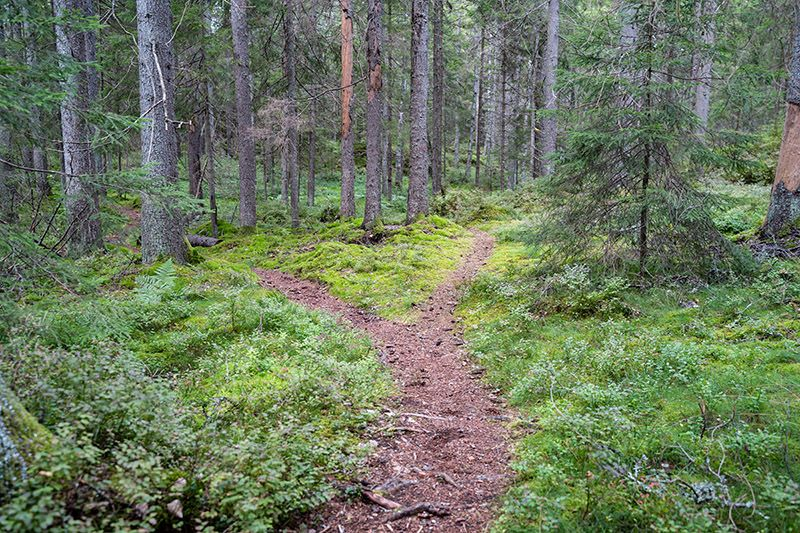
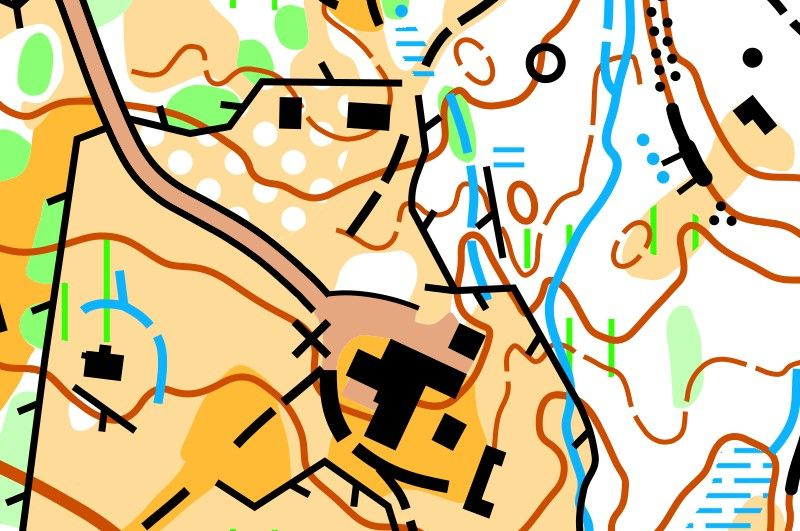
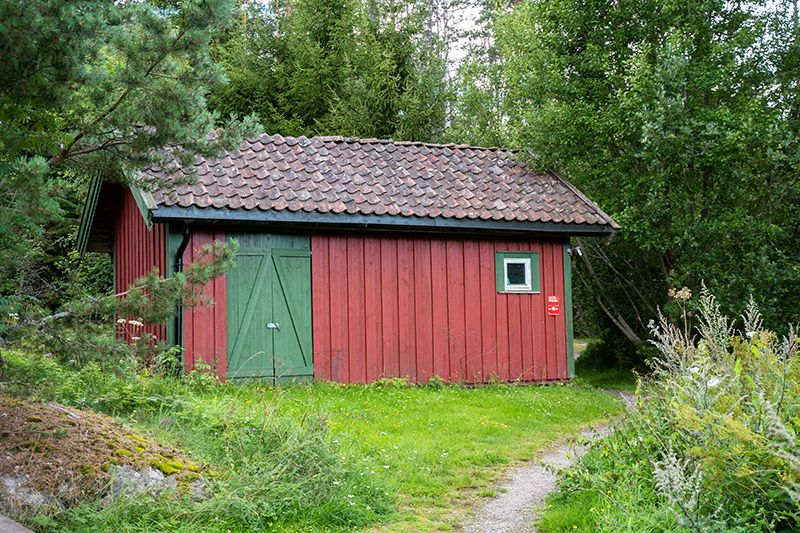
Where are you on the map when you see this right in front of you in the terrain?
ShowHide answer
Answer:
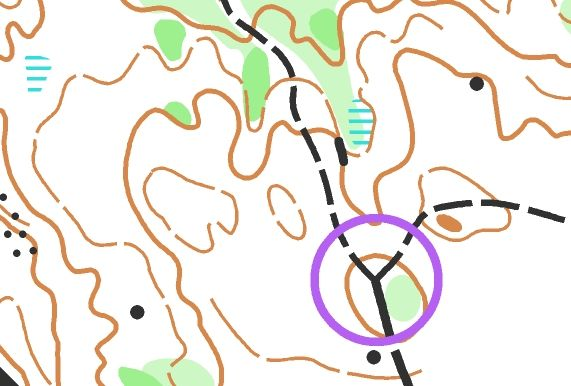
Where are you on the map when you see this right in front of you in the terrain?
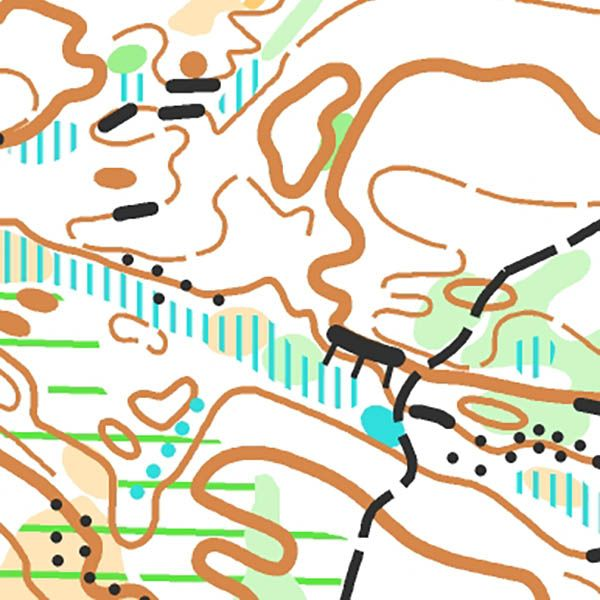
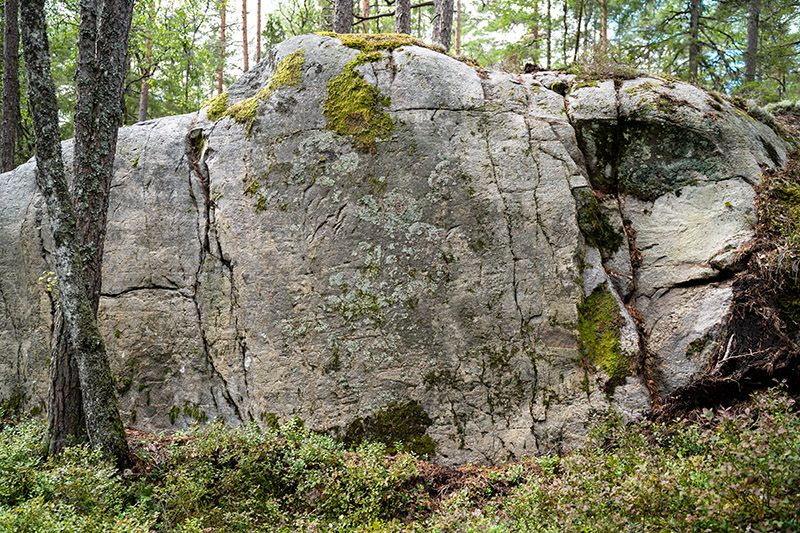
ShowHide answer
Answer:
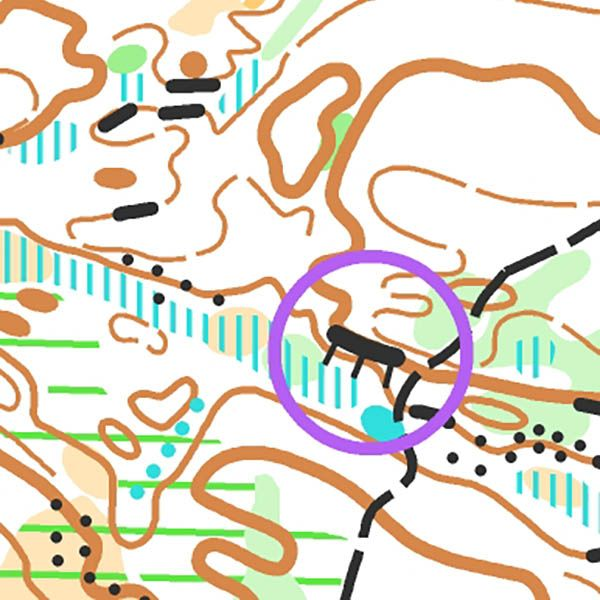
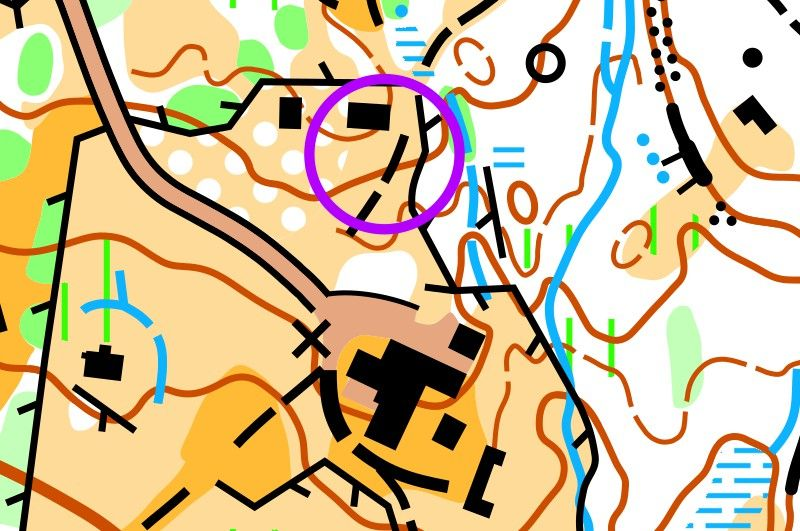
Where are you on the map when you see this right in front of you in the terrain?
ShowHide answer
Answer:
Thumbing the map
When you are going to find a control, you must make a plan. First question: “Where am I?” Second question: “Where am I going?” Hold the map in front of you, turn in the direction you want to go and orientate the map. Keep your thumb on the map where you are. Move it forward as you go from one checkpoint to the next.
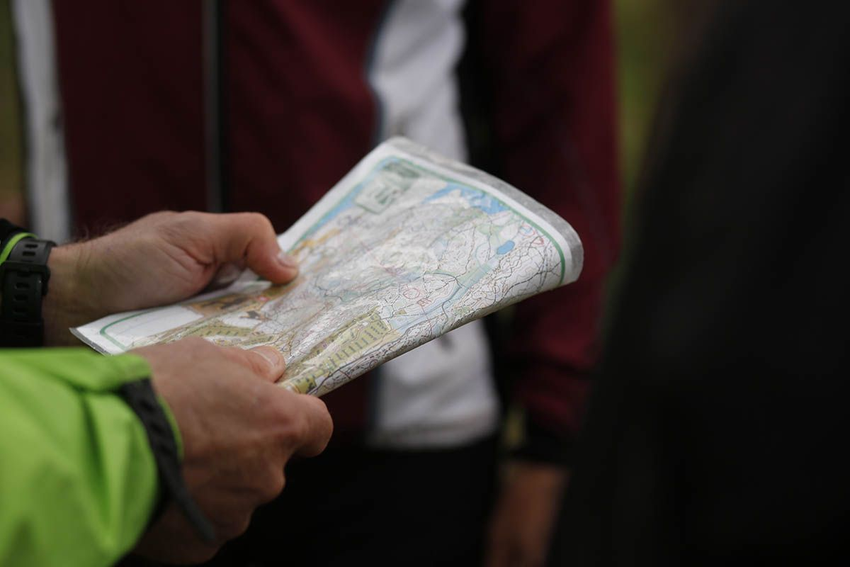
Your thumb “goes” the same route on the map that you go in the terrain. It is easier to keep track and you quickly find out where you are the next time you look at the map. This is called thumbing the map.
Practise thumbing
.svgz-wDxXmvIKm8.jpg)
Where would you place your thumb on the way from control 1 to control 2?
.svgz-YbG2Y25ANM.jpg)
.svgz-kV_Wsn9ZW-.jpg)
.svgz-eJVWzCWFC5.jpg)
.svgz-u06wPhfOFv.jpg)
.svgz-A5rchjEsW5.jpg)
.svgz-xUpPZ8qULO.jpg)
.svgz-v23p3IREGr.jpg)
.svgz-SbKdiAjF-K.jpg)
.svgz-BHtX3uE8fF.jpg)
It is smart to fold the map so you can thumb the map all the time as you move. Along the course you will almost certainly have to fold the map again several times.
What have you learned?
Answer all questions correctly and win a gold medal!
What is map contact?
How should you read the map?
What is thumbing?
How often should you thumb the map?
How do you have good map contact?
When is it easiest to have map contact?
Is it smart to fold the map?
Activities
Play: Labyrinth-orienteering (Activity Bank)
With orienteering map: Star-orienteering (Activity Bank)
Video: Children's map reading and map understanding (YouTube)