About “Help, I made a mistake”
Here you learn what it means to “make a mistake” and what you should do to regain control as quickly as possible.
You don't know where you are
Making a mistake means you fail to follow the plan you made to find your way on the leg. You don’t fully know where you are. Therefore it takes extra time to find the next control.
You can learn from both your own and others’ mistakes. Yes, most people learn orienteering this way.
Why do you make mistakes?
What might be the reason you make a mistake? Perhaps you:


If you make a mistake
Stop and stand still. Admit to yourself that you made a mistake.You must not start running in a zig‑zag, searching for the control hoping it will appear sooner or later.
Try estimating in which direction and how far you have gone since the last reliable checkpoint.
Find a reliable checkpoint or a line feature by looking around, moving forward or sideways, or going back to the last reliable checkpoint you passed or the last line feature you followed.
You must look at the terrain and make it match the map, or look at the map and make it match the terrain. Then make a new plan and try again.
It can be smart to walk 100 meters away, perhaps even more, to find a large and reliable feature instead of searching back and forth in the same small area.
Drag the slider to see different solutions
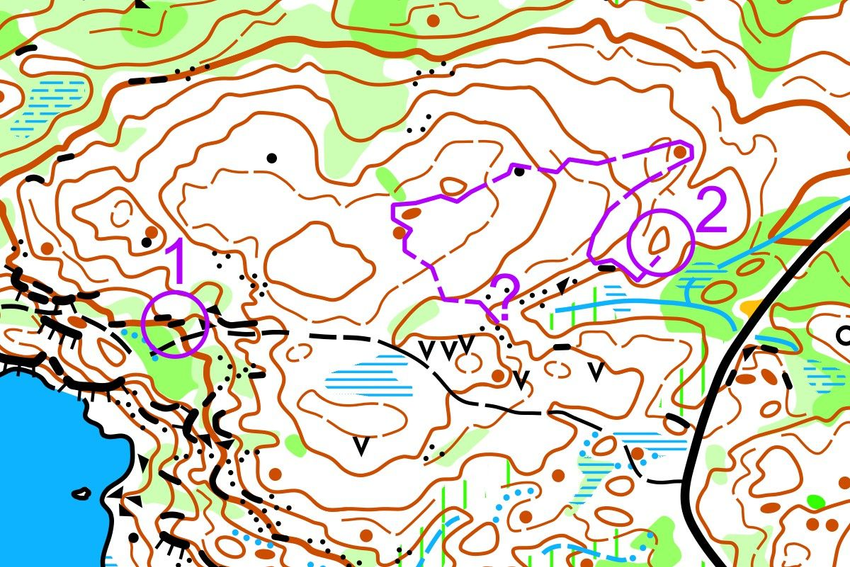
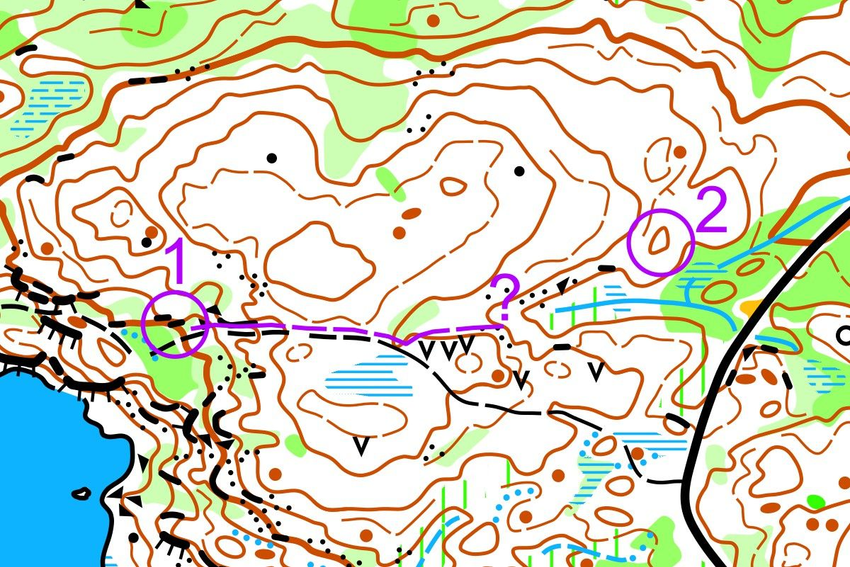
You can search, wander around and randomly find the control.
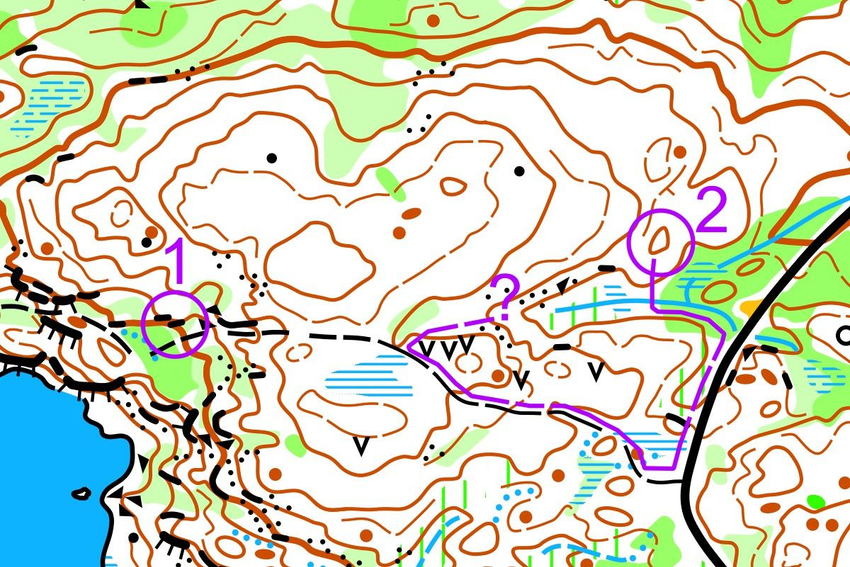
You can go back to the last reliable checkpoint and make a new, easier plan.
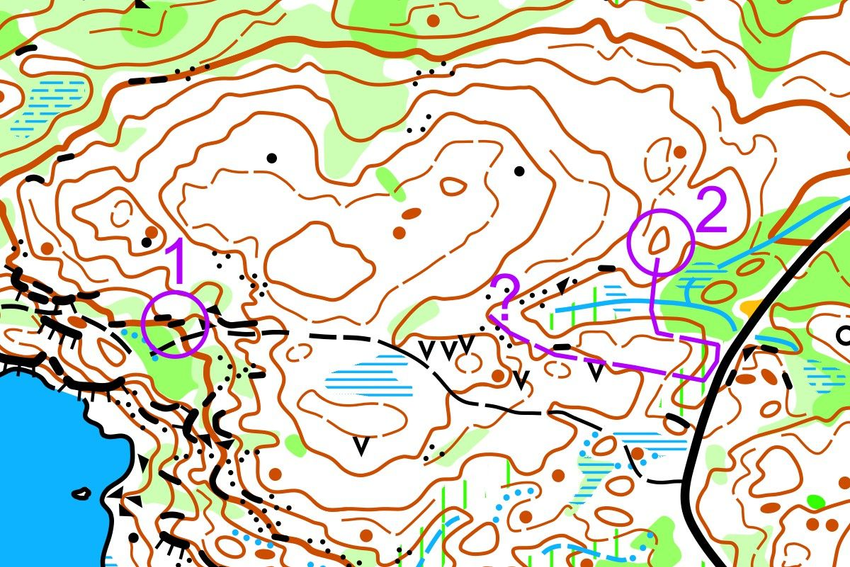
You can go forward to the a reliable checkpoint and make a new, easier plan.
Avoid mistakes
When making a route choice you must consider the difficulty of the leg and choose what suits you best. In addition it helps to have knowledge of different terrain types.
Who do you think makes the most mistakes: a beginner or someone who has orienteered for several years?
ShowHide answer

Tips
Different orienteering techniques
Use simplification and rough orienteering in hilly terrain.
Slow down when searching for controls on a hillside.
Use fine orienteering and pay close attention to the map in detailed terrain (for example terrain with many knolls).
Be precise with compass bearings in flat terrain.
Use felled areas and dense vegetation as catching features.
Practise reading contours and using them to orienteer.
Reflection
When you finish a course it can be useful to think about what you did well and what you could have done differently. This way you can improve and orienteer even better next time.
What have you learned?
Answer all questions correctly and win a gold medal!
What does it mean to make a mistake?
What should you do when you realise you have made a mistake?
How can you avoid making mistakes?
In which terrain is the risk of making mistakes the highest?
What helps you make as few mistakes as possible?
Activities
With orienteering map: Minute Orienteering (Activity Bank)