
About “Catching Features”
Here you learn about different terrain features that can be used as catching features along the way, so you avoid going wrong or going too far.
Good line catching features
Using catching features means that you move through the terrain until you hit a line feature which you are certain to reach, even if it is out of sight. Paths, roads, streams, field edges, power lines and ponds make for good catching features.
When you go towards a secure catching feature, you don’t need to check the map all the time, because you know you will be caught eventually. But it is smart to use the compass to make sure you keep the right direction. And be attentive when you approach so you don’t pass the catching feature without noticing it.
Using catching features along different line features
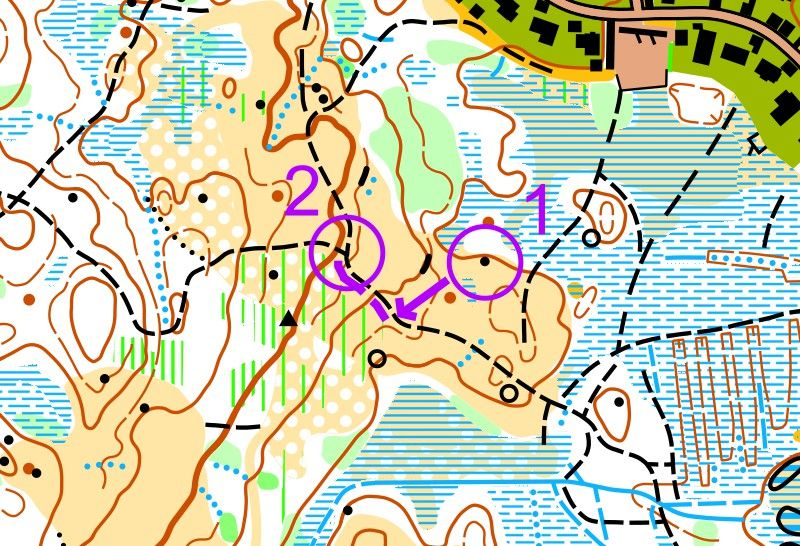
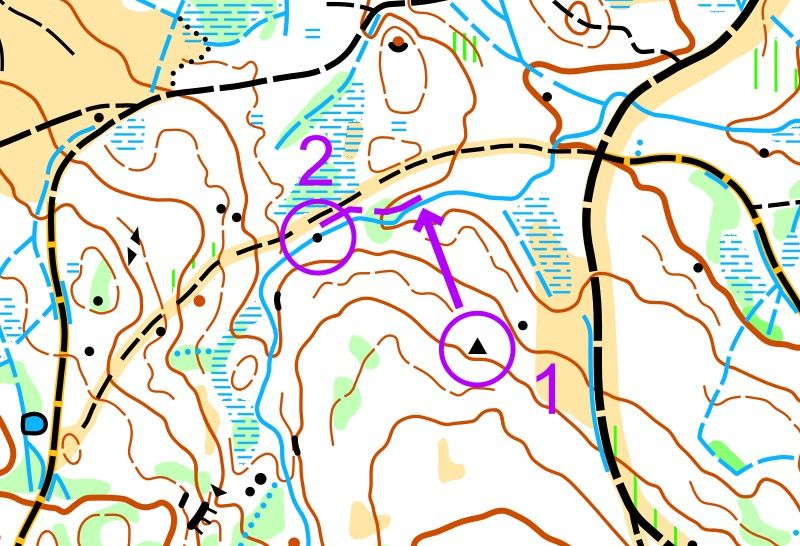
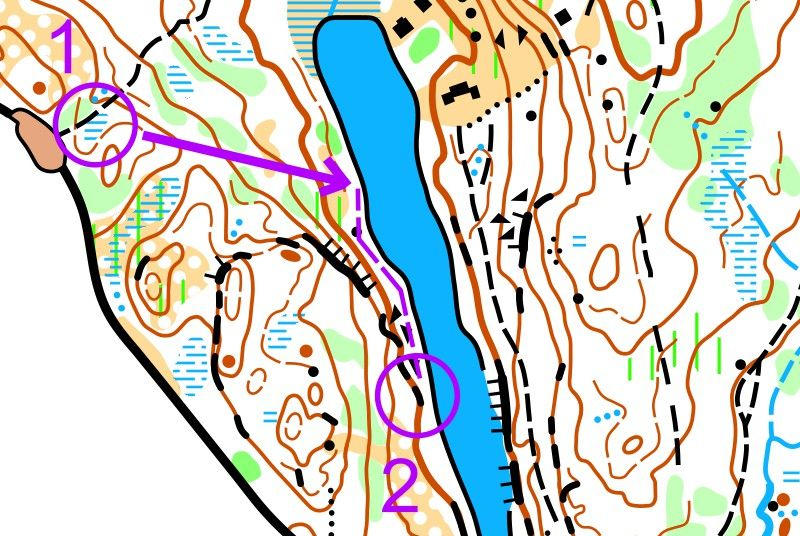
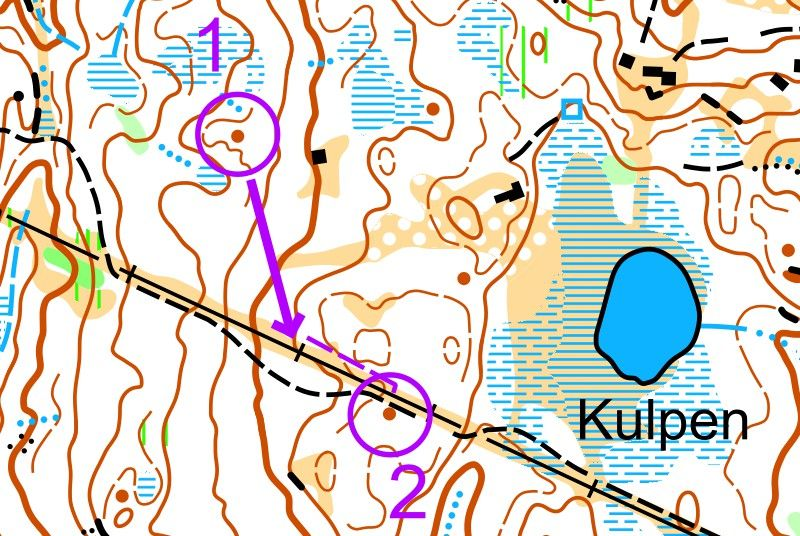
Click the buttons to see map examples.

Tips
If the control lies along the line feature you are using as a catching feature then it can be smart to aim slightly to one side of the control. Then you know which way to go when you hit the line feature. In the example above you aimed slightly left towards the stream, right towards the path and quite a bit left towards the pond.
Can you find your way?
Look at the map below. Here you can use catching features several times on the way to the next control. This makes the route shorter and you will likely reach the control faster, even if you do not follow line features the whole way. Can you see where you should go? Drag the slider.
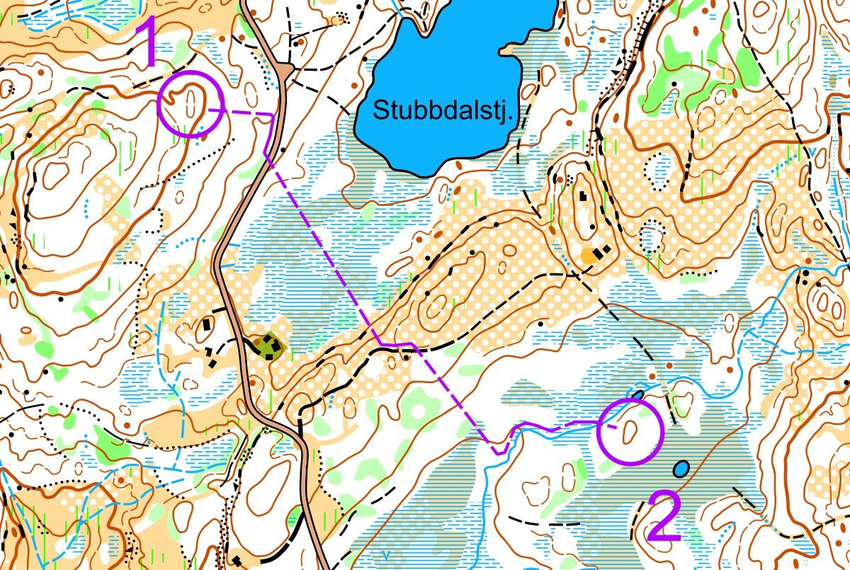
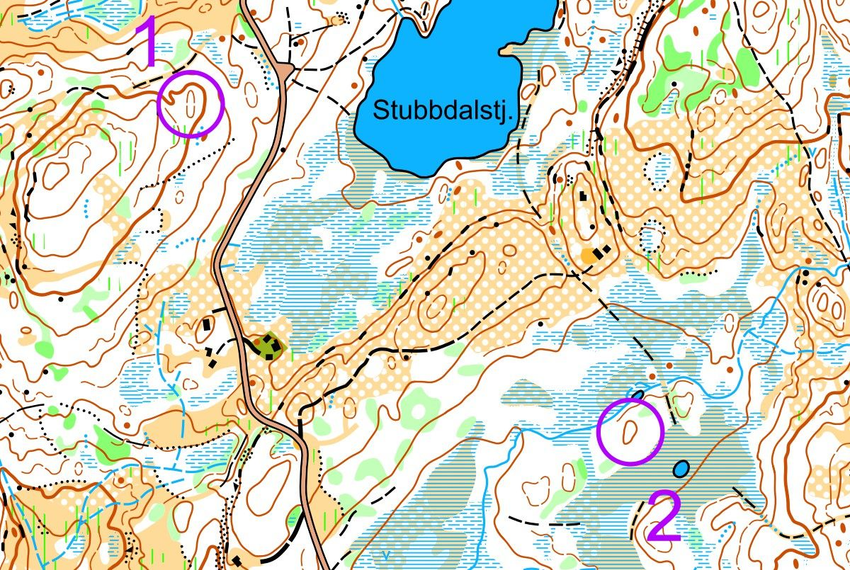
You are standing at control 1 on the hill. Go east to the road. Follow the road south until you reach the boulder on the left side. Take a compass bearing across the marsh to the bend in the path. Follow the path to the boulder on the left side. Take a compass bearing through the forest to the stream. Follow the stream to the hill on the left side, where the control is.
The example above shows that catching features are often useful to avoid long detours: You leave a safe line feature – take shortcuts through the terrain – and let yourself be caught by other line features. Sometimes you must use catching features because there are no continuous line features leading to the control.
Practice catching features
You should practice using catching features until you feel confident. Should you start with this in nearby terrain close to buildings or further into the forest?
ShowHide answer
More options
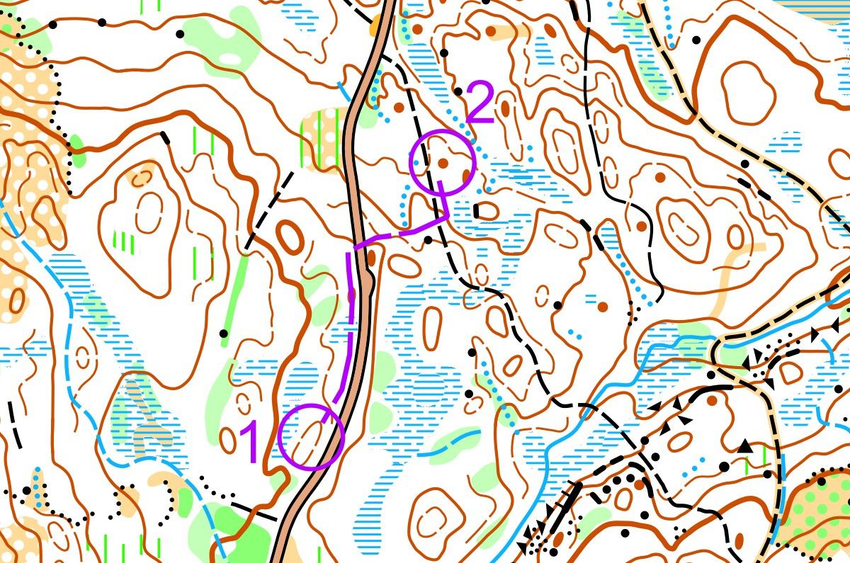
When using catching features it is smart to leave the line feature at a reliable checkpoint, for example the knoll in the example below.
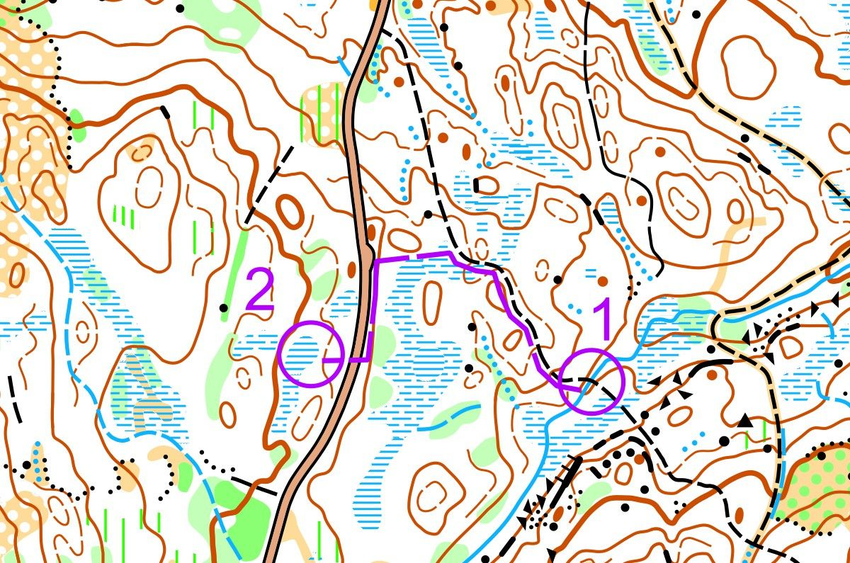
Other times it is smarter to leave the line feature where it is closest to the new line feature you want to be caught by. In this example that is at the bend in the path.
What have you learned?
Answer all questions correctly and win a gold medal!
What is meant by catching features?
What is important when using catching features?
Catching features are useful because you …
Which of these is an example of using a catching feature?
Which of these make good catching features?
Which of these is the best catching feature?
Which of these terrain features is the best catching feature?
Which of these features makes the safest catching feature?

Activities
Play: The Troll Game (Activity Bank)
With orienteering map: Star Orienteering (Activity Bank) Adaptation: Make several loops with two controls in each, placed on two different line features close to each other.